Customer research and feedback revealed that users were joining meetings with their camera and/or microphone off by mistake.
This created delays in starting meetings, and in the worst cases, meetings couldn't take place at all.We found two main types of users: novice users joining a single meeting for something like a bank or medical appointment, and expert users with back-to-back meetings and more technical familiarity with video calls.
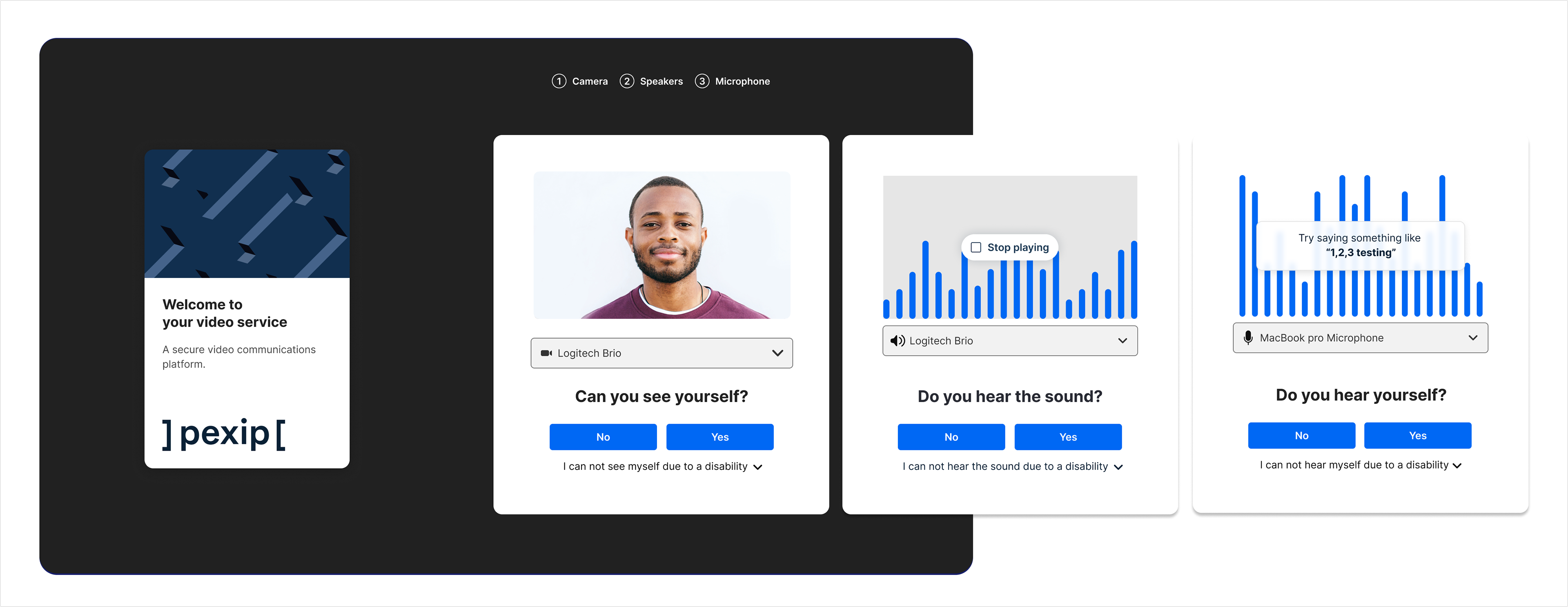
Step-by-step join flow for novice users
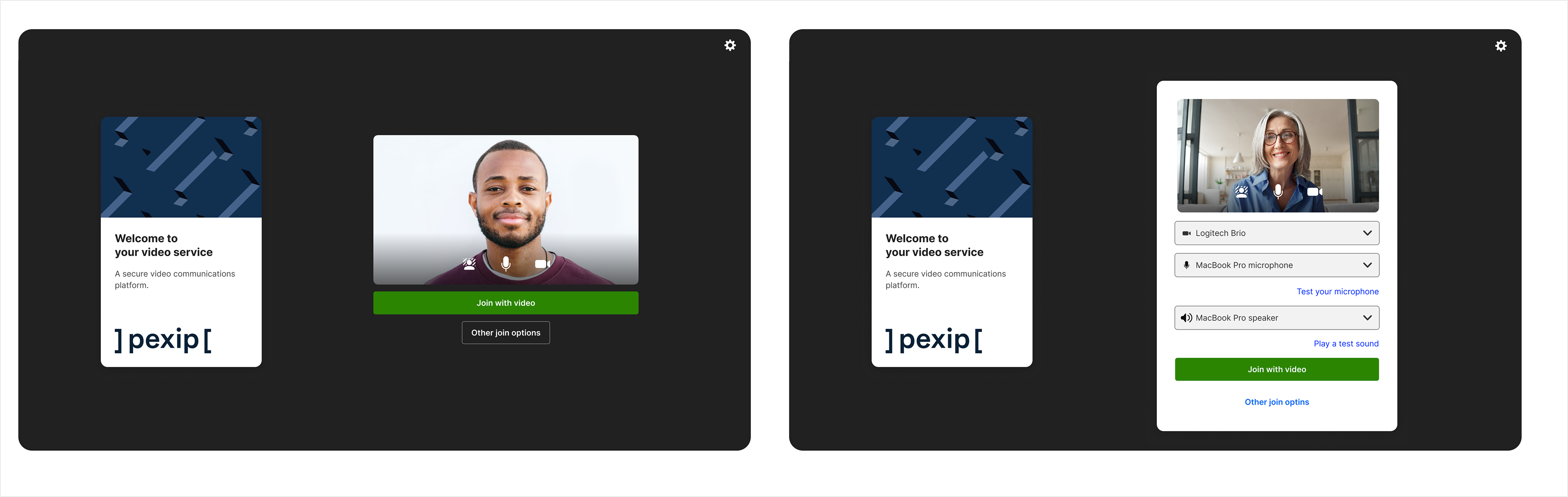
To meet both users' needs, I created two distinct join flows: one that prioritized speed for expert users, and one for one-time or novice users that prioritized making sure all their devices were working before joining.
The admin or host could choose which join flow their participants would follow. Regardless of the flow, all participants ended up in the same meeting.
Novice users received help by default to check that their devices were working. When there were issues with a device, contextual feedback guided them on how to enable it.Expert users went straight to a device selection screen, where all options were displayed at once, prioritizing speed and keeping every control within easy reach.
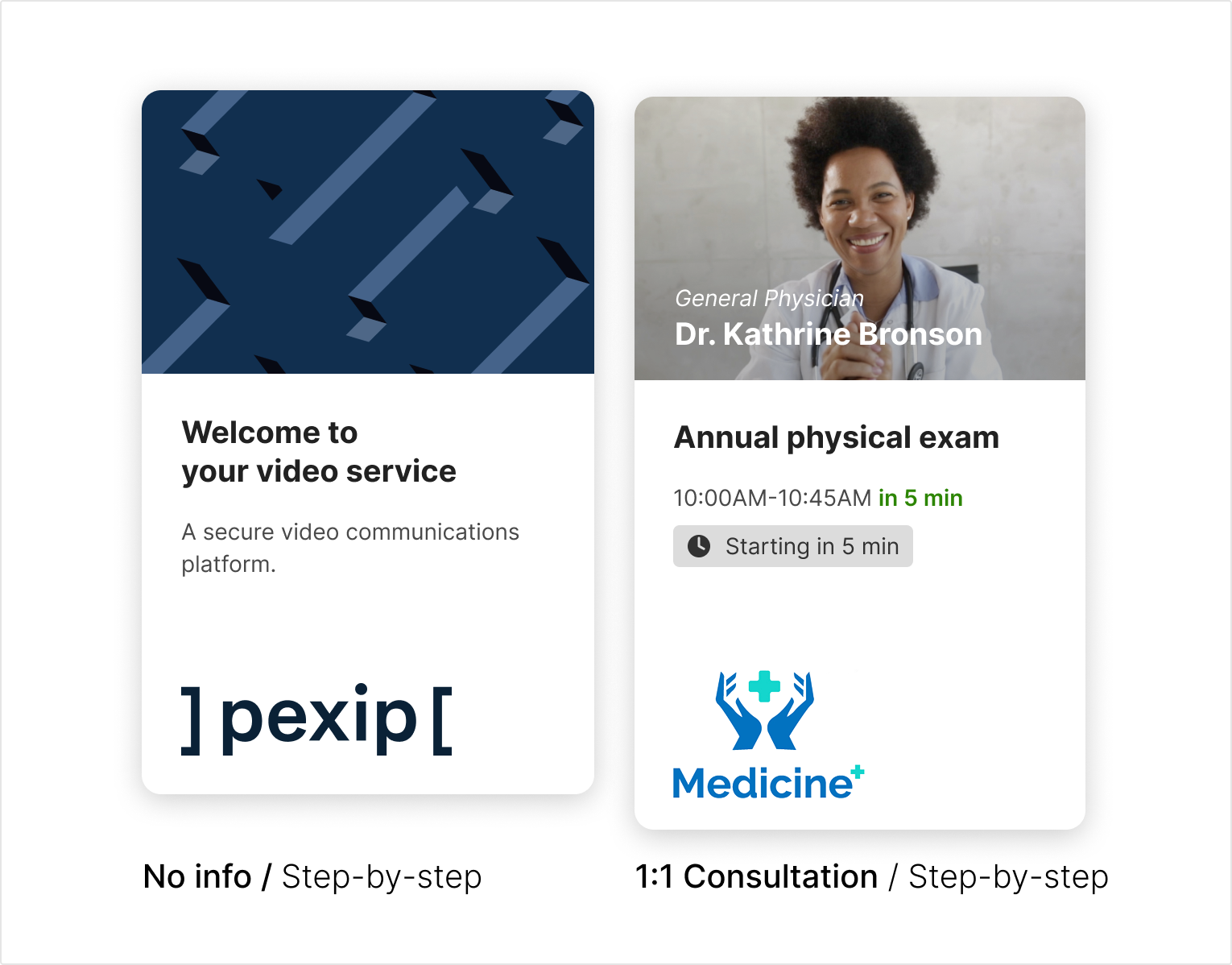
The video meeting could replicate the cues and assurances that in-person appointments provide, like signage.
Another finding during this project was that end users needed reassurance that they were in the right place before joining the meeting. So we leaned further into the customization capabilities the app already offered, and updated the admin portal to reduce friction and save time for admins.
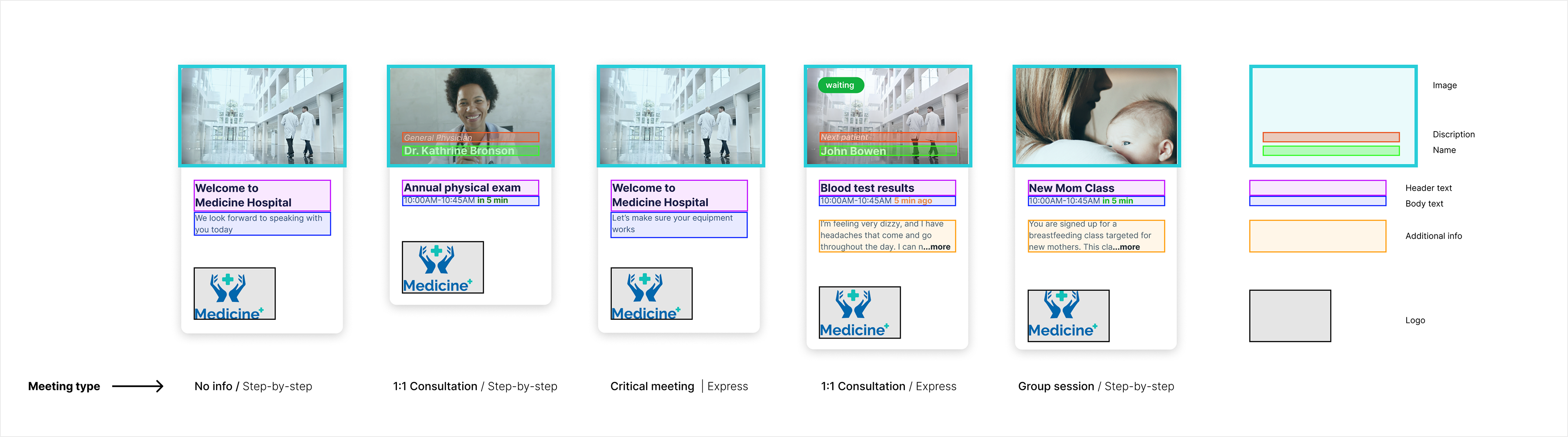
Prototype of admin tool for customization. Made with Claude Design
With the ability to check their devices and see cues confirming they were in the right place, we addressed the reassurance need for one-time users, while for expert users, we maintained fast meeting joins and kept all controls in one place.
The ability to customize what users saw once they joined the lobby reduced stress for both one-time users and experts, who might have back-to-back meetings and no time to review upcoming meeting details.
This direction was validated through PM and support-team feedback after launch, though we didn't have quantitative usage data to measure impact directly — a known trade-off of the product's privacy-first design.